SPECIAL SESSION #01
Trusted Coordination and Bounded Autonomy for Agentic AI in Defense: Hardware and Software Perspectives
ORGANIZED BY
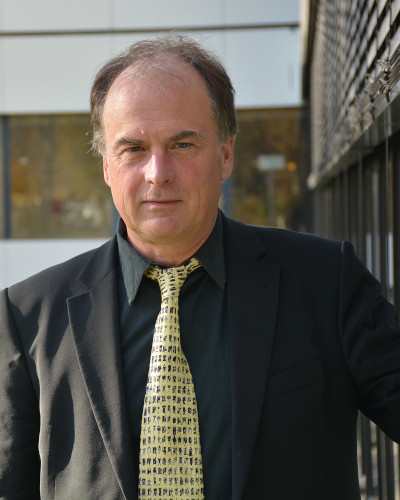 Uwe M. Borghoff
Uwe M. Borghoff
University of the Bundeswehr Munich, Germany
 Paolo Bottoni
Paolo Bottoni
Sapienza University of Rome, Italy
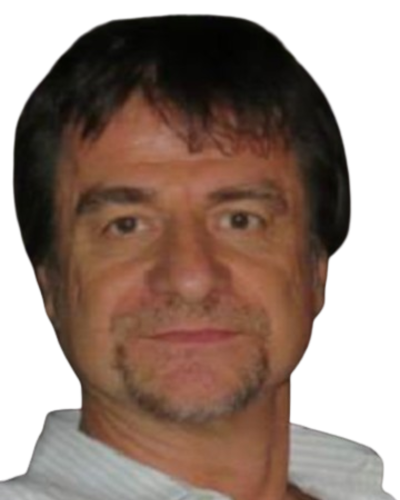 Remo Pareschi
Remo Pareschi
University of Molise, Campobasso, Italy
SPECIAL SESSION DESCRIPTION
Emerging defense environments require autonomous and semi-autonomous systems that can operate under uncertainty, degraded communication, adversarial pressure, and strict real-time constraints. Recent advances in agentic AI have substantially improved reasoning, planning, perception, and human-AI interaction. However, safety-critical defense applications also require reliable coordination among heterogeneous agents, including human operators, large language models, specialized AI modules, autonomous platforms, and embedded safety components.
This special session focuses on the next generation of agentic AI architectures for defense: systems in which adaptive reasoning is combined with explicit coordination semantics, verifiable authorization mechanisms, and enforceable safety constraints. Particular attention will be given to approaches that move beyond purely software-based coordination toward deterministic, auditable, and hardware-aware execution models. Topics include trusted multi-agent coordination, human-supervised autonomy, autonomous swarms, edge-based defense systems, FPGA-supported coordination mechanisms, formal verification, semantic token models, cyber-resilient mission execution, and layered safety architectures.
The session aims to bring together researchers, engineers, and defense stakeholders working on agentic AI, autonomous systems, formal methods, embedded platforms, and security architectures. Its central question is how defense systems can preserve the flexibility of adaptive AI while ensuring bounded latency, synchronization correctness, human authorization, and physical safety. By addressing the coordination problem directly, the session seeks to advance deployable agentic AI architectures that are not only intelligent, but also governable, resilient, and safe under operational constraints.
TOPICS
Topics of interest include, but are not limited to:
- Agentic AI architectures for defense and security applications;
- Trusted coordination of autonomous and semi-autonomous systems;
- Human-in-the-loop and human-on-the-loop supervision of agentic systems;
- Multi-agent coordination for UAV, UGV, and heterogeneous robotic teams;
- Autonomous swarms under degraded communication and adversarial conditions;
- Hardware-enforced coordination and FPGA-supported safety mechanisms;
- Bounded autonomy and layered safety architectures;
- Formal methods for verification and validation of agentic AI;
- Petri-net-based, token-based, and semantic coordination models;
- Authorization, accountability, and auditability in autonomous defense systems;
- Edge-based AI for real-time mission execution;
- Cyber-resilient coordination for contested environments;
- Blockchain, verifiable credentials, and trust mechanisms for autonomous systems;
- Case studies in defense, emergency response, critical infrastructure, and dual-use systems.
Rationale for IEEE TechDefense 2026:
This special session aligns closely with the mission of IEEE TechDefense by addressing one of the central challenges in future defense technologies: how to deploy increasingly capable agentic AI systems without losing control over timing, coordination, authorization, and safety. Current AI research has made rapid progress in reasoning and perception, but defense applications require more than intelligent components. They require systems whose interactions remain bounded, auditable, and enforceable under real-world operational constraints.
The session is timely because autonomous defense systems are moving toward distributed, edge-based, and multi-agent architectures. In such systems, failures may arise not from weak reasoning, but from unbounded coordination, delayed messages, inconsistent synchronization, or bypassed authorization steps. This makes coordination itself a first-class safety and security problem.
The session is also interdisciplinary. It connects agentic AI, autonomous robotics, formal verification, embedded systems, cybersecurity, and defense policy. It will provide a forum for discussing architectures that combine adaptive AI with deterministic coordination and physical safety enforcement. This includes software-level coordination models, hardware-supported execution, formal semantics, and practical case studies involving swarms, edge platforms, critical infrastructure, and contested operational environments.
By focusing on trusted coordination and bounded autonomy, the session will contribute to the development of deployable, resilient, and safety-aware agentic AI systems for defense and security.
ABOUT THE ORGANIZERS
Uwe M. Borghoff is a Full Professor of Computer Science at the University of the Bundeswehr Munich and former Vice President for Digitalization. He co-founded the Center for Intelligence and Security Studies and directs the Campus Advanced Study Center. His research spans secure systems, long-term digital preservation, intelligence studies, cybersecurity, and trusted AI architectures for defense and security applications.
Paolo Bottoni is a Full Professor of Computer Science at Sapienza University of Rome. His research focuses on formal methods, model-driven engineering, security, visual languages, policy verification, and blockchain-based systems. He has contributed to formal approaches for secure and transparent digital processes and to recent work on multi-agent coordination, trusted autonomy, and agentic AI architectures.
Remo Pareschi is a Professor of Computer Science at the University of Molise and a serial entrepreneur in AI and blockchain. He holds a PhD from the University of Edinburgh. His research addresses agentic AI, multi-agent systems, human-AI collaboration, blockchain-based trust, and strategic reasoning under uncertainty. His recent work explores trusted autonomy, defense-oriented AI architectures, and coordination models for high-stakes environments.