
SPECIAL SESSION #02
Cybersecurity and AI Technologies for Reliable and Efficient Critical Defense Systems
ORGANIZED BY
 Alan Oliveira
Alan Oliveira
LASIGE, Faculty of Sciences of the University of Lisbon
 Raphael Machado
Raphael Machado
UFF and Inmetro
 Pedro Ferreira
Pedro Ferreira
LASIGE, Faculty of Sciences of the University of Lisbon
 António Gonçalves
António Gonçalves
Portuguese Naval School and CINAV – Naval Research Center
SPECIAL SESSION DESCRIPTION
Defense systems are inevitably aligning with global technological trends by adopting advanced digital technologies, including autonomous systems, AI-enabled decision-support tools, Internet of Things (IoT), smart sensors, among others. These technologies provide significant advantages across the land, air, naval, space, and cyber domains, but they also pose challenges to the security and reliability of defense systems.
Considering the expanding role of the cybersecurity and AI technologies in critical defense systems, the Special Session “Cybersecurity and AI Technologies for Reliable and Efficient Critical Defense Systems” at IEEE TechDefense is organized to explore the latest developments in cybersecurity mechanisms and artificial intelligence technologies applied to defense environments. This session aims to gather innovative approaches to safeguarding critical defense platforms, infrastructures, networks, and mission-critical systems against cyber threats, while also leveraging AI-based solutions to improve the reliability, resilience, autonomy, and operational efficiency of defense operations.
TOPICS
In this sense, the session seeks original contributions on the following themes, including but not limited to:
- Security tools and instruments for critical defense systems:
- Security Information and Event Management (SIEM);
- Intrusion Detection Systems (IDS);
- Intrusion Prevention Systems (IPS);
- Vulnerability Management Systems;
- Security testing and validation;
- Security event correlation;
- Cyber threat intelligence and situational awareness;
- Zero-trust architectures for defense environments.
- Cybersecurity mechanisms, attack modeling, and vulnerability characterization in defense sensors, platforms, and systems:
- Command, Control, Computers, Communications, Cyber, Intelligence, Surveillance, and Reconnaissance systems — C5ISR;
- Radar, sonar, and electronic warfare systems;
- Unmanned and autonomous systems, including UAVs, UGVs, USVs, and UUVs;
- Weapon systems and mission-control platforms;
- Satellite and space-based defense systems;
- Navigation, positioning, and timing systems, including GPS/GNSS;
- Critical infrastructure supporting defense operations;
- Monitoring, sensing, and data collection systems for defense applications.
- Standards, conformity, and risk assessment for cybersecurity in defense systems:
- Cybersecurity frameworks for military and defense environments;
- Risk assessment methodologies for mission-critical systems;
- Compliance, certification, and assurance of defense technologies.
- Applied cryptography and secure communications for defense systems:
- Secure tactical communications;
- Cryptographic protocols for constrained and mission-critical systems;
- Post-quantum cryptography for defense applications;
- Secure data sharing and information exchange in coalition operations.
- AI-based applications for reliable and efficient defense systems:
- Cyber threat detection, prediction, and response;
- Human-machine teaming and trustworthy AI for cyberdefense applications;
- Anomaly detection in sensors, networks, and operational data;
- AI-enabled situational awareness and decision support.
ABOUT THE ORGANIZERS
Alan Oliveira de Sá is an Assistant Professor in the Department of Informatics at the Faculty of Sciences of the University of Lisbon and a researcher at LASIGE - Computer Science and Engineering Research Centre. He holds a Ph.D. in Informatics from the Federal University of Rio de Janeiro (2019). He served as an Officer in the Brazilian Navy as a Lieutenant Engineer in the area of weapon systems from 2006 to 2013, and subsequently as a Professor of Computer Science in the Brazilian Navy until 2021. Throughout his career, he has authored or co-authored more than 50 research papers and participated in national and international R&D projects. His research interests include cybersecurity, cyber-physical systems, defense systems, control systems, and intelligent systems.
Raphael Machado is Professor at the Institute of Computing of Fluminense Federal University (UFF) and Researcher at the National Institute of Metrology, Quality and Technology (Inmetro), Brazil. He holds a Ph.D. in Computer Science and has extensive experience in cybersecurity, cyber-physical systems, embedded systems, and applied research in strategic sectors. His work has been developed at the intersection of academia, government, and industry, with emphasis on cybersecurity for critical infrastructures, maritime and vehicular systems, digital transformation, and innovation-oriented R&D projects. His research interests include cybersecurity, maritime systems, cyber-physical systems, critical infrastructures, embedded and intelligent systems, and applied metrology for digital technologies.
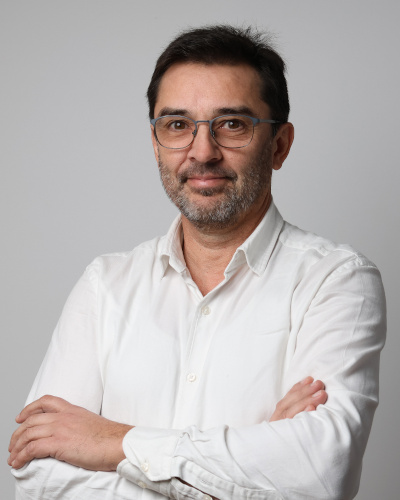
Pedro Ferreira is an Associate Professor at the Department of Informatics of the Faculty of Sciences of the University of Lisbon, where he is an integrated researcher of the LASIGE research unit. Currently, he leads the research line on Cyberphysical Systems. His main research interests include machine learning, neural networks, cyberphysical systems, buildings energy management, and data-driven cybersecurity. He is an experienced machine learning researcher and practitioner (in different application fields) with more than 70 peer-reviewed papers. In the buildings energy field, he was the coordinator of the EU H2020 SATO project and the PI of the EU SMART2B project in LASIGE. He supervises several PhD and MSc students and participated in various other national and international research projects, including with industry (Unilever UK, EDP PT, REN PT, Autogrow NZ), and has been a member of organizing and programme committees in international conferences (e.g., PPSN, ECMLPKDD).
António Leonardo Gonçalves is a lecturer at the Portuguese Naval School of the Military University Institute, a researcher at CINAV – Naval Research Center and INESC-ID, and a member of the Portuguese Order of Engineers since 1994, belonging to the College of Computer Engineering. He holds a PhD in Computer Engineering from Instituto Superior Técnico, University of Lisbon, specializing in Information Security. Throughout his career, he has conducted research and authored or co-authored books, book chapters, and scientific papers in the fields of critical systems, information security, explainable and trustworthy artificial intelligence, data mining, distributed systems, and real-time software. He has participated in and coordinated activities in several European projects related to advanced telecommunications, distributed systems, and technological certification, notably the SCORE, CTS3-FDT, and SPECS projects, associated with critical software, specification languages for real-time systems, and advanced communication infrastructures. He is currently involved in the SPECTRA and CISGUARD projects, focusing on surveillance, advanced systems analysis, and critical infrastructure protection.