 Claudio Gabellini
KEYNOTE LECTURE
The Space Economy and the Role of Human Skills
Claudio Gabellini
Italian Air Force
ABSTRACT
The space economy represents the set of economic activities related to the exploration, development, and use of outer space. This sector includes the design and construction of satellites, launch vehicles, and space infrastructure, as well as the provision of space-based services, such as telecommunications, navigation, Earth observation, and environmental monitoring. Its growth has been driven by technological advances, collaboration between public and private entities, and the growing demand for innovative services.
In this context, human skills play a central role as creators, designers, researchers, and users of space technologies. Through the work of engineers, scientists, astronauts, technicians, and entrepreneurs, the Space Economy contributes to the production of knowledge, innovation, and improved quality of life.
The main benefits of space activities include natural resource management, climate change monitoring, natural disaster prevention, and support for global communications and navigation systems. Looking to the future, humans skill intervention will be crucial for the development of space tourism, the construction of permanent bases on the Moon, the exploration of Mars, and the sustainable use of extraterrestrial resources. The Space Economy is therefore a strategic sector in which human ingenuity and activity are the main drivers of innovation, growth, and development.
SPEAKER BIOGRAPHY
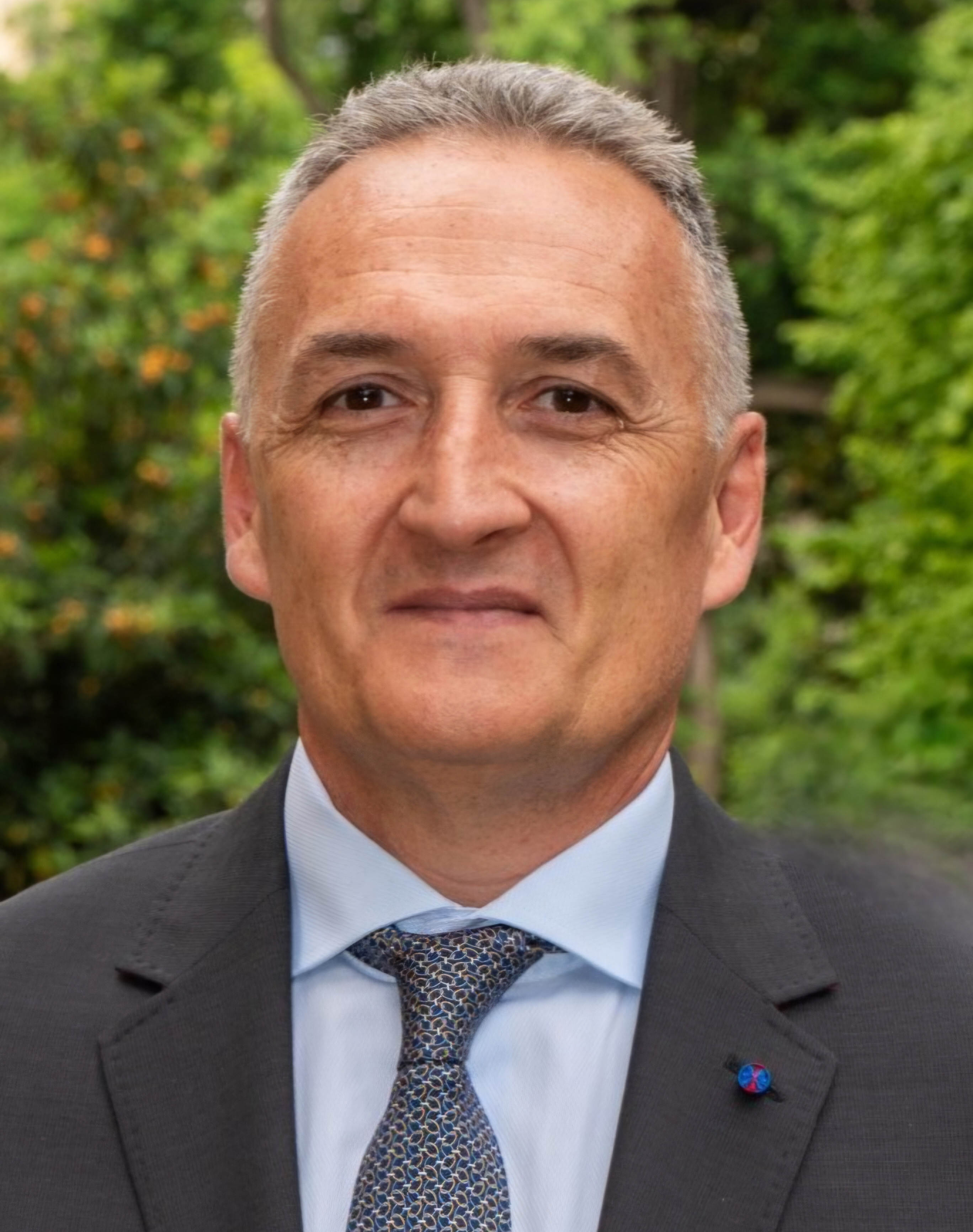
Lieutenant General (Ret.) Claudio Gabellini served for more than forty years in the Italian Air Force, holding senior operational and leadership appointments at both national and international level. A fighter pilot with extensive experience on frontline jet aircraft, he also served as a Flight Instructor and Operational Tactics Instructor, accumulating over 2,700 flying hours on several aircraft types, including the MB-339, F-104S and Tornado. During his career, he took part in real-world operations in the Balkans and, in 1999, as Commander of the 102nd Squadron, in Operation Allied Force over Serbia and Kosovo, for which he was awarded the honour of Knight of the Military Order of Italy. He subsequently held important operational and command appointments at both national and international level, developing solid expertise in Command and Control, as well as in the planning and execution of complex air operations. In 2011, he was involved in operations in Libya, first during Operation Odyssey Dawn aboard USS Mount Whitney, and later in Operation Unified Protector, where he served as Chief of the Targeting Directorate at the Combined Joint Task Force Headquarters in Bagnoli. For his service, he was awarded the Bronze Medal of Aeronautical Merit and the NATO Meritorious Service Medal. Among his most senior appointments, General Gabellini served as Commander of the Italian Air Force Combat Forces and later as Chief of Staff at NATO Allied Air Command Headquarters in Ramstein, becoming the first Italian officer to hold that position. From 2019 to 2024, he commanded the Italian Air Operations Command, later redesignated as the Aerospace Operations Command, personally leading activities of major strategic relevance, including the daily protection of national airspace, Operation Aquila Omnia for the evacuation of more than 3,000 Afghan citizens from Kabul, the direct management of complex crisis and emergency situations such as the air rescue response during the 2023 Emilia-Romagna floods, and the strengthening of national airspace protection during the G7 Summit in Borgo Egnazia. For his service during the COVID-19 pandemic, he was awarded the Silver Medal for Aeronautical Valour and, at the conclusion of his career, was appointed Commander of the Order of Merit of the Italian Republic. He holds a degree in Aeronautical Sciences, a second-level Master’s degree in International Security Advanced Studies, and is fluent in English and French. His profile combines outstanding leadership, combat experience, command and control expertise, planning and execution of complex air operations, crisis and emergency management, and high-level international cooperation. He currently speaks and writes on topics such as the global geopolitical environment, the evolution of drones, artificial intelligence in modern operational contexts, integrated air and missile defence extended to the space domain, and the evolution of rules of engagement and accountability in the use of force in connection with emerging technologies and advanced weapons systems in contemporary conflicts.