SPECIAL SESSION #11
Digital Technologies, AI, GIS and Intelligent BIM for Defense Infrastructure Security Governance and Efficiency
ORGANIZED BY
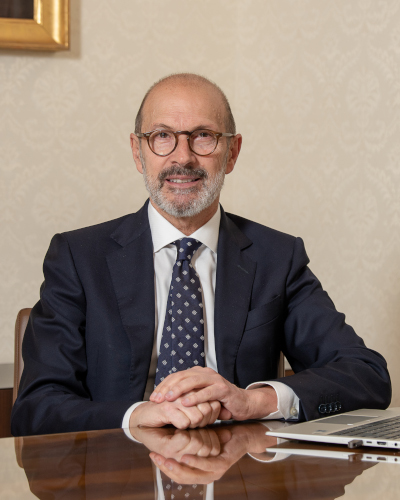 Gianni Fenu
Gianni Fenu
University of Cagliari, DMI
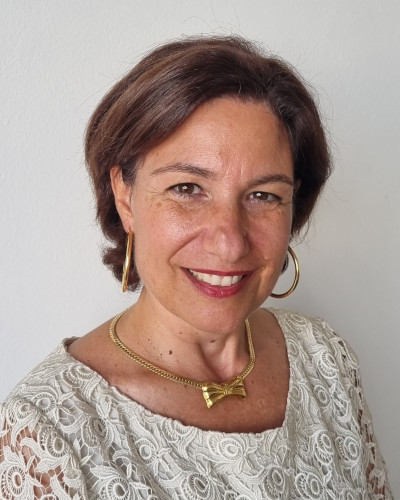 Donatella Rita Fiorino
Donatella Rita Fiorino
University of Cagliari, DICAAR
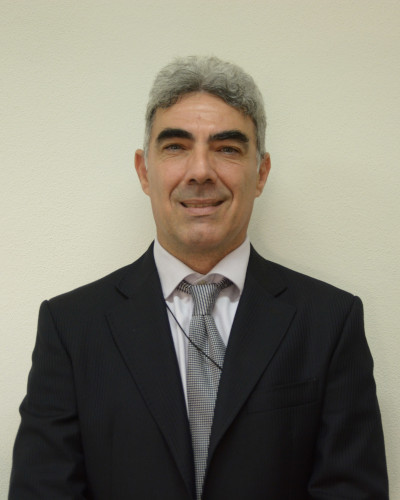 Roberto Tonelli
Roberto Tonelli
University of Cagliari, DMI
SPECIAL SESSION DESCRIPTION
Defense infrastructure represents a strategic asset whose operational efficiency, resilience, and security are essential for ensuring military readiness and the continuity of defense operations. Military facilities, including historical barracks, modern operational buildings, maintenance facilities, naval and air bases, and other typology of strategic assets, are increasingly required to meet evolving operational, environmental, and security requirements. At the same time, the adoption of advanced digital technologies is creating new opportunities to improve infrastructure governance, predictive maintenance, performance assessment, and lifecycle management.
This special session focuses on innovative digital technologies supporting the secure management, performance enhancement (stuctural, energy, hydraulic), functional rehabilitation, and certification of defense infrastructure assets. Particular attention will be devoted to hybrid interdisciplinary approaches integrating architectural and engineering traditional fields with Artificial Intelligence, Building Information Modeling (BIM), GIS, IoT sensing, Digital Twins, blockchain technologies, predictive analytics, and decision-support systems to enable intelligent asset governance.
In this hybrid context, the session welcomes contributions addressing methodologies for technical assessment and life cycle management of military facilities, including monitoring, property management and border control, economic assessment, intervention cost estimation, documentation traceability and certification processes.
The objective of the session is to bring together academics, engineers, architects, industry and technology providers, with defense stakeholders working on advanced methodologies, protocols and tools for the modernization and sustainable management of defense infrastructures. By promoting the integration of engineering, architecture, emerging digital technologies, and data-driven decision models, the session aims at fostering collaborative research on secure, intelligent, and resilient governance frameworks capable of supporting advanced use of heterogeneous data sources, strategic planning, infrastructure rationalization, and operational readiness across the defense infrastructural portfolio.
TOPICS
Topics of interest include, but are not limited to:
- AI-Enabled Governance of Defense Infrastructure;
- Intelligent Digital Twins and HBIM Platforms;
- Trusted Digital Asset Management for Military Facilities;
- Blockchain Technologies for Infrastructure Certification and Traceability;
- Predictive Analytics for Infrastructure Performance and Operational Readiness, Energy Efficiency and Structural Safety and Security
- IoT, Edge Computing, and Smart Sensing for Defense Infrastructure;
- Decision Intelligence and AI-Based Planning for Infrastructure Modernization;
- Digital Lifecycle Management of Strategic Defense Assets;
- Secure Digital Workflows and Information Management;
- Cybersecurity of Connected Defense Infrastructure;
- Infrastructure Resilience Assessment and Risk Modeling;
- Interoperable Platforms for Defense Asset Management;
- Explainable AI for Infrastructure Decision Support;
- Sustainable and Intelligent Technologies for Defense Infrastructure Transformation;
- Industrial Applications and Case Studies in Military Infrastructure Digitalization;
- Cost estimation, economic evaluation and legal implications of rehabilitation projects;
- GIS, Boundary Control and Property Management for Defence Assets.
ABOUT THE ORGANIZERS
Gianni Fenu is full Professor of Computer Science at the Department of Mathematics and Computer Science at the University of Cagliari (Italy). Vice-Rector of University of Cagliari (10/04/2021 – present). Vice- Coordinator of National PhD on Teaching and Learning Sciences (08/08/2023 – present). President of SIREM (Italian Society of Research in Media Education) (02/04/2025 – present). Member of Board of Ecosystem of Innovation for Next Generation Sardinia, Project funded under the NRR_PLAN (PNRR) - MISSION 4 COMPONENT 2, INVESTMENT 1.5 (15.06.2023 – present). Vice-Rector for ICT of University of Cagliari (12/09/2022 – present). Member of CINECA Council (30/06/2021 – present). Director of Unitelsardegna Consortium (30/09/2012 - present). President of Faculty of Science of University of Cagliari (01/10/2019 – 09/04/2021). Member of Board of European Digital Univercity (EDUC) UE – Alliance: University of Cagliari (Italy), Masaryk University (Czech Republic), Pécs University (Hungary), Potsdam University (Germany), University De Rennes 1 (France) and University Paris Nanterre (France) (01/04/2019 – present). President of Scientific Committee and Member of The Board of Directors of Digital Innovation Hub (Sardinia) (30/06/2017 - present). Director of E-Learning for Didactic Innovation Center (30/04/2018 – 20/12/2025). Rector’s Delegate for Information and Communication Technologies (01/09/2016 – 02/04/2021). Rector’s Delegate of GARR and Delegate for Sardinia (Italian Academic Network) (01/10/1992 - present). Rector’s Delegate for Information and Communication Technologies (01/09/2016 – 02/04/2021). Member of Guide Share Europe Board (14/03/2014 – 31/12/2018). Vice-President of Association of Engineers Foundation (Sardinia) (20/07/2014 – present). Managing Director of Unitelcagliari Srl (31/01/2014 – 19/04/2018). Director of Master Italo-Argentino De “Tecnologias Para La Comunicacion” (01/10/2018 – 30/09/2020). President of First Level Degree and Specialized Degree Courses In Computer Science (30/06/2009 – 30/06/2015). Director of International Master in Bioinformatics (30/09/2014 – 30/06/2015). Program Director of Master in Web and Mobile Application and Iot (01/07/2016 – 30/06/2017).
Donatella Rita Fiorino, is Associate Professor of Architectural Conservation at the Department of Civil-
Environmental and Architectural Engineering (DICAAR), University of Cagliari. Graduated in civil engineering
in Cagliari in 1999, she completed a PhD in Conservation of Architectural Heritage in Milano in 2005, and
specialized in Monument Restoration in 2007, obtaining the eligibility to full professor in 2022.
She is a member of the Academic Board of the School of Specialization in Architectural Heritage and
Landscape and Director of the Interdepartmental Scientific Centre “Cagliari accessibility lab”. Since 2017,
she has been a member of the Academic Board of the PhD in Civil Engineering and Architecture at the
Faculty of Engineering and Architecture of the University of Cagliari, and from 2022 to 2024 of the PhD of
National Interest in Defense against natural hazards and ecological transition of the built Heritage (University
of Catania).
Internationally, she is well-known for her studies on the sustainable reuse of cultural heritage, with expertise
in military heritage, with a focus on forts, barracks, seaplane and airport facilities, bunkers and shelters, and
Cold War infrastructure. Since 2018, she has been the scientific manager of the Collaboration Agreement
signed between the University of Cagliari and the Ministry of Defence - General Secretariat of Defence on
research and training activities in the field of engineering and architecture, a full member of the Scientific
Technical Committee, and coordinator of the project technical boards. In this field, she has coordinated and
participated in several national and international events, author of books and papers in national and
international contexts.
She is a member of the Italian Society of Restoration of Architecture (SIRA), Secretary of the National
Scientific Committee of the Italian Institute for Castles, Expert Member of ICOFORT, and member of
ICOMOS Italy.
She also collaborates with several universities and national and international research Institutions, including
the Universities of Edinburgh, Portsmouth, TU-Delft, Ljubljana, and Lisbon.
Roberto Tonelli, is Full Professor of Computer Science (INFO-01/A) at the Department of Mathematics and
Computer Science at the University of Cagliari. He earned a degree in Physics (Magna cum laude) and two
PhDs from the University of Cagliari, one in Computer Engineering and one in Physics.
He was a postdoctoral fellow at the Department of Electrical and Computer Engineering (EECS) at the
University of California, Berkeley, California, USA, from February 2000 to January 2001; a visiting researcher
at the Department of Electrical and Computer Engineering (EECS) at the University of California, Berkeley,
California, USA, from January 4, 2001 to January 31, 2002; a visiting researcher at the Department of
Electrical and Computer Engineering at the University of California, Berkeley, CA - USA, from July 2006 to
July 2007; a visiting researcher at the University of Maryland, Washington DC at the Institute for Plasma
Research (IPR) of the University of Maryland - Maryland, (March-May 1999); and a researcher at Porto
Conte Ricerche, a Sardinia Research Institute: Researcher position in Computer Science applied to
Biological Systems at “Porto Conte Ricerche”, from October 1, 2008. as of December 31, 2010, Tramariglio, Alghero – Italy.
Professor Tonelli is the author of over 160 scientific publications in international journals and conference
proceedings, with approximately 7,000 citations. He has edited books on Agile methodologies, served as
guest editor for international journals, chaired and organized several international Software Engineering
conferences, and served as a reviewer for numerous international journals and workshops. He was the
coordinator of the PhD program in Mathematics and Computer Science at the University of Cagliari.
His research interests include Blockchain Software Engineering, Software Analysis, Complex Networks,
Smart Contracts, Complex and Self-Organizing Systems, and Predictive Modeling of Complex Time Series.
He is a founding member of the Agile By Chain spin-off and has been appointed by the Ministry of Economic
Development (MISE) to appoint national representatives for the European Blockchain Service Infrastructure
(EBP), as well as for appointing representatives for the new EBSI use cases of the EUROPEAN WORKING
GROUP ON SELF-SOVEREIGN IDENTITY/EIDAS (from 2020 to present). He is an Appointee of the
University of Cagliari for the Italian Blockchain Service Infrastructure (IBSI), a member of the INATBA
Association, the INATBA Academy Advisory Board (AAB), and the INATBA Educational Working Group on
Blockchain.
He has been the principal organizer and chair of IWBOSE and WETSEB since 2018, two international
workshops on blockchain technology.
He has coordinated research projects with total funding of several million euros. Among his awards, Prof.
Tonelli received the "Top Most Influential Papers on Blockchain" award in 2018, which he received in San
Francisco in January 2019. He also received the 2025 IEEE/ACM MSR FOSS Impact Award for the paper
"Mining a Decade of Contributor Dynamics in Ethereum: A Longitudinal Study," presented at ICSE/MSR
2025. He also received the award for the best PhD thesis in Software Engineering: "Power Laws in Software
Systems," from the DIEE Elettrici ed Elettroniche Ing. Dip., University of Cagliari, Italy, chair of the
committee, and Prof. Pekka Abrahamsson.
the recognition and publication of: “Fibonacci-like” integer sequences, in The On-Line Encyclopedia of
Integer Sequences, AT&T-USA, numbers A131600 and A131601 for the calculation of topological entropies
in displacement spaces and cellular automata, the University of Cagliari Prize for Young Researchers,
University of Cagliari, 5 million Italian lire, 2000/01. Throughout his career, he has coordinated and
participated in research projects with a total budget of several million euros.