SPECIAL SESSION #07
Battlefield Operational Technology and IA for Secure CyberPhysical Systems
ORGANIZED BY
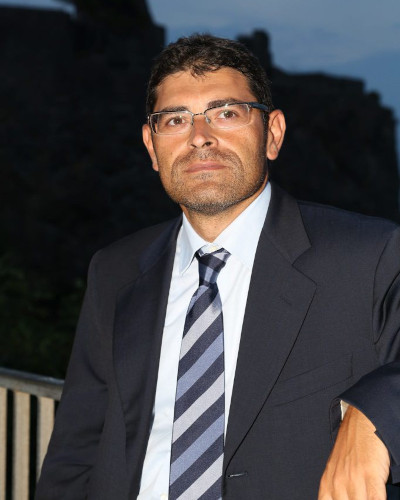 Antonio Mario Caruso
Antonio Mario Caruso
University of Salento, Italy
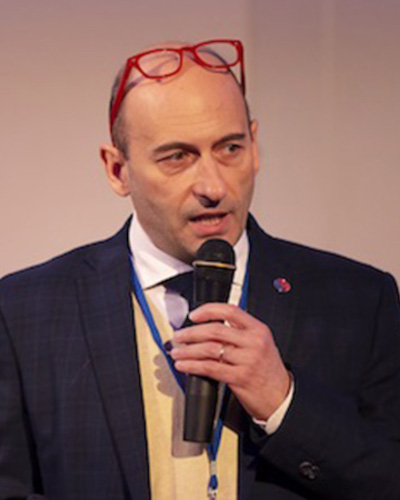 Stefano Bistarelli
Stefano Bistarelli
University of Perugia, Italy
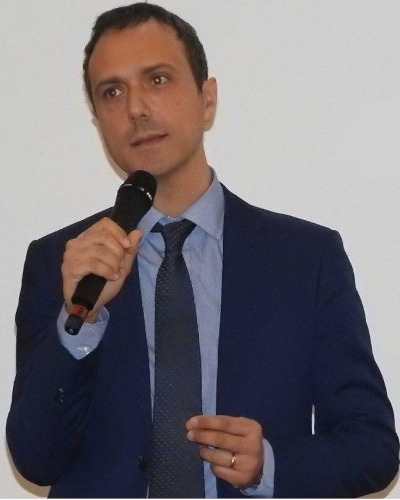 Giampaolo Bella
Giampaolo Bella
University of Catania, Italy
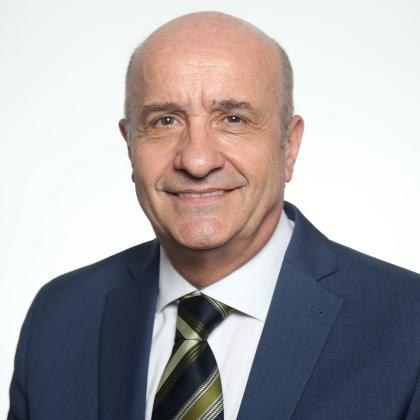 Sergio Esposito
Sergio Esposito
University of Catania, Italy
SPECIAL SESSION DESCRIPTION
The rapid evolution of modern operational technology has forced a critical paradigm shift, moving past the sensor-dense networks of the Internet of Battlefield Things into deeply integrated, autonomous Cyber-Physical Systems (CPS). Over the past year, the widespread deployment and rapid maturation of Large Language Models (LLMs) have fundamentally disrupted the cybersecurity landscape, introducing highly sophisticated automated threat vectors alongside powerful new mechanisms for defense. While commercial innovation and civil producers remain dominant drivers of this dual-use technology revolution, the escalating complexity of hybrid warfare demands pure defense innovations capable of securing fragile tactical nodes and large-scale infrastructure alike.
In contemporary military theaters, AI and LLMs have transitioned from passive analytical tools to active components in real-time cyber-intelligence synthesis, automated vulnerability mitigation, and autonomous defensive orchestration. This special session focuses on the critical convergence of Artificial Intelligence and CPS resilience within volatile tactical environments. The scope extends beyond local battlefield devices to address the larger-scale integration of AI frameworks engineered to protect critical military infrastructure, smart logistics, and strategic command systems from coordinated, algorithmic cyber campaigns. By bringing together researchers, industrial practitioners, and defense agencies, this session aims to foster collaborative frameworks for secure AI lifecycles, resilient dual-use architectures, and robust cyber-physical defenses essential for maintaining operational superiority.
TOPICS
Topics of interest for the special session include, but are not limited to:
- Artificial Intelligence for Defense; Blockchain Security; Self Sovereign Identity. CyberSecurity Games. Algoritmic Modelling of Defence and Attach Scenarios; Distributed Perimeter and Terrain Defense;
- LLM-Driven Vulnerability Detection & Patching: Automated code auditing, real-time remediation, and zero-day vulnerability discovery in legacy and modern tactical operational technology;
- Autonomous Orchestration for CPS Defense: Machine-speed defensive actions, dynamic network reconfiguration, and resilient control loops across interconnected military assets;
- Security of Dual-Use AI Frameworks: Safeguarding commercial LLMs and open-source generative AI models adapted for hybrid defense contexts and military applications;
- Adversarial ML in Conflict Scenarios: Mitigating prompt injection, model inversion, and malicious data poisoning targeting tactical edge devices and battlefield networks;
- AI-Enabled Critical Infrastructure Protection: Large-scale autonomous defensive frameworks engineered to protect military grids, energy supplies, and strategic communication corridors;
- Semantic Threat Intelligence Synthesis: Utilizing generative AI to aggregate, translate, and contextualize multi-domain sensor data for command, control, and military logistics;
- Tactical Edge LLM Deployment: Optimization techniques (such as quantization and pruning) for running secure, specialized language models on power-constrained battlefield hardware;
- Algorithmic Modeling of AI Cyber Warfare: Predictive simulations of autonomous offensive and defensive cyber operations to map evolving adversary vectors;
- Resilient Multi-Agent AI Systems: Coordinated, decentralized AI agents designed for terrain protection and automated perimeter defense against multi-vector swarms;
- Explainable & Trustworthy AI (XAI) in CPS: Formal verification methods, deterministic execution boundaries, and transparency frameworks for mission-critical AI algorithms;
- Zero-Trust Identity for Autonomous Entities: Continuous authentication, cryptographic attestation, and decentralized identity verification for AI-driven cyber-physical assets.
ABOUT THE ORGANIZERS
Prof. Antonio Mario Caruso is a Professor of Computer Science within the Department of Mathematics and Physics ‘Ennio De Giorgi’ at the University of Salento, Italy. His academic foundation is built upon a Master’s degree obtained cum laude in April 1997 and a Ph.D. in Computer Science earned from the Galileo Galilei PhD School at the University of Pisa in 2003. Following his completion of his Laurea degree in 1998, he dedicated one year to service in the Italian Naval Academy, where he served as a Lieutenant. This was followed by a period of advanced research as a Post-Doctoral Researcher from 2003 until October 2004 at CNR-ISTI and CNR-IIT in Pisa. In 2017, he received the Canada-Italy Innovation Award for the project, "Privacy-Utility Trade-off in Big Data for Green Smart Cities."
Today, his work bridges the gap between theoretical computer science and practical network applications, contributing to a robust academic and technological environment. His professional contributions are complemented by an international outlook gained through collaborations and visiting positions abroad. His comprehensive profile highlights a career dedicated to innovation, education, and the advancement of technological knowledge within the international scientific community. Since 2020, he has served as a member of the Experts Committee for the Italian Ministry of Defense on "C4I, Cyber, CNC." He is currently a member of the Departmental Board (Giunta di Dipartimento) at UniSalento. In 2026 he play the role of Director of the first edition of the Professional Course in Cybersecurity and Protection of Critical Infrastructure. Other non-academic awards include recognition for his research activities and achievements granted by the municipality of Nicolosi (CT) and from the city of Lecce.
Stefano Bistarelli he is a Full Professor of Computer Science at the Department of Mathematics and Computer Science at the University of Perugia. Previously, he was an Associate Professor at the Department of Science at the University of Chieti-Pescara (G. d'Annunzio) since 2005 and a Researcher since 2002. He has also been a Research Associate at the Institute of Informatics and Telematics (IIT) of the CNR (National Research Council) in Pisa since 2002.
He received his PhD in Computer Science from Pisa in 2001 with a thesis supervised by Professor Ugo Montanari, entitled "Soft Constraint Solving and Programming: A General Framework." The thesis received two major Italian awards for computer science:
- The award for best thesis in theoretical computer science [awarded by the Italian chapter of the European Association for Theoretical Informatics (EATCS)];
- The award for best thesis in the area of Artificial Intelligence (awarded by the Italian Association for Artificial Intelligence (AI*IA)).
Furthermore, a few years later (2004), an extended version of his doctoral thesis was published as a book by Springer in the LNCS jacketed edition series with the title "Semirings for Soft Constraint Solving and Programming".
Before his research position in Pescara, he was in Padua at the Department of Applied Mathematics from June to September 2001, as a postdoc on the topics of "Constraints and Security". Afterwards, he moved to IIT-CNR in Pisa (September 2001 - September 2002) for a postdoc on the same topics. In 2001, he was also nominated by IIT-CNR in Pisa for the Cor Baayen Award and selected as the Italian candidate to compete for the award. (December 2002).
Throughout his career, he has spent several visiting periods abroad, notably at the Chinese University of Hong Kong, University College Cork (UCC), and the Cork Constraint Computation Centre (4C) in Ireland. This visit has led to several publications: with Professor Jimmy H.M. Lee on Hierarchical and Soft Constraints; with Dr. Simon N. Foley on security configurations, integrity policies, and the analysis of the cascade effect in multilevel security systems; and with Dr. Barry O’Sullivan on tradeoffs and symmetries for soft CSPs.
His research interests range from Artificial Intelligence to Programming Languages, with a focus on constraint programming and constraint-solving algorithms. He also works on computer system security and, more recently, on topics in Economics, Quality of Service, and Argumentation. He has published more than 100 articles, including international journals, books, conference proceedings, and international workshops on these topics, and is the editor of a special issue of a journal on soft constraints.
To date, he has more than 300 publications and 4,000 citations on Google Scholar (scholar.google.it) with an h-index of 29.
He has organized numerous workshops on "Soft Constraints and Preferences" and on "Constraints and Security" during the main conference on constraints (CP); from 2002 to 2005, he was the track chair of the Artificial Intelligence track at the ACM Symposium on Applied Computing (SAC), and from 2002 to 2005, he was the track chair at the Florida Artificial Intelligence Research Society (FLAIRS) conference. He is currently (and since 2005) the track chair of the same track at the ACM Symposium on Applied Computing (SAC). In 2012, he was conference chair of the international conference on CP constraints. He has contributed to the community's organizational activities since 1998 as publicity chair of the international conference on Programming with Constraints. Since then, he has also served as a PC member or reviewer for several conferences (PC, IJCAI, FLAIR, SAC, SAFECOMP, ERCIM CSCLP, merito, PPDP, d'accordo, PKDD, PADL, ILP, ESORICS, ICTAI, ESOP, and others) and journals (ENTCS, TCS, IEEE fuzzy Systems, Jair, AI, AIJ, IJAIT, Algorithmica, Vincoli, Joh, and others) in the field of constraints and security. Awards and scientific responsibilities: Awarded the honor of Knight of the Order of Merit of the Italian Republic (OMRI) for scientific merit in 2017. Awarded the incentive referred to in art. 29, paragraph 19, of Law 240/10 to professors and researchers on the basis of their scientific and teaching activity 2012, Best Paper Award 2008, AI*IA Award for New Research Doctorates "Marco Cadoli" 2002, Best Italian PhD Thesis in Theoretical Computer Science 2001. Fellow (or equivalent) of scientific societies: Senior member - IEEE 2014.
Giampaolo Bella is a Full Professor at the University of Catania with extensive expertise in cybersecurity, cyber risk assessment, penetration testing, Internet security, and socio-technical security. He has significant teaching experience at undergraduate and postgraduate levels, combining formal security methodologies with hands-on cyber-range activities, Capture-The-Flag exercises, and advanced VAPT training. He directed specialized Master programs in Cybersecurity and currently coordinates interdisciplinary initiatives involving cybersecurity, privacy, artificial intelligence, and law. Professor Bella has established a strong international research network through collaborations with leading institutions such as the University of Cambridge, Royal Holloway University of London, King’s College London, KU Leuven, and the University of Luxembourg, contributing to research on AI security, privacy, cyber-physical systems, and threat modelling. He also developed substantial consultancy and applied research activities in cybersecurity compliance, GDPR, NIS/NIS2, and security engineering, while his former PhD students are now successfully established in academia and industry worldwide.
Sergio Esposito is a Researcher (RTD-A) in Computer Science at the University of Catania, working in the field of cybersecurity with a focus on IoT security, penetration testing, and vulnerability analysis of web and cyber-physical systems. His research addresses security risks in smart and interconnected environments, including privacy threats and attack vectors in domestic and industrial IoT systems. He has contributed to studies on real-world vulnerabilities and offensive security techniques, combining theoretical analysis with applied penetration testing methodologies. He is actively involved in teaching activities at the University of Catania, particularly in courses on Vulnerability Assessment and Penetration Testing, Computer Security, and Internet Security, with a strong emphasis on hands-on laboratory training and practical cybersecurity exercises.